
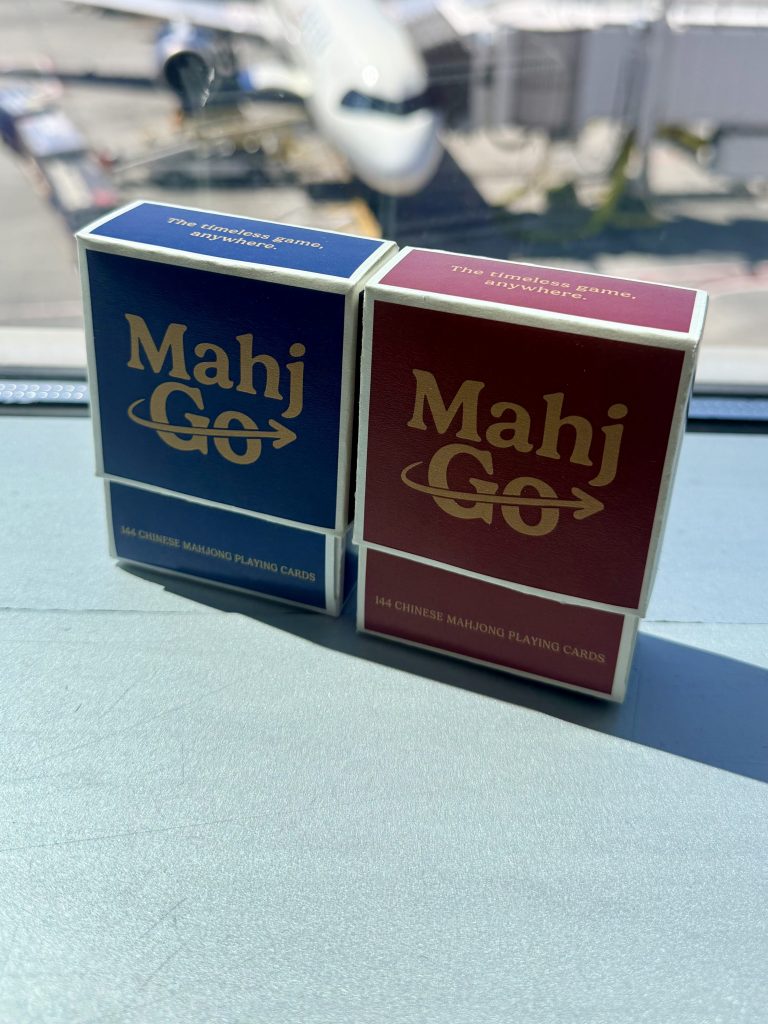
One Deck, Infinite Ways to Play. Mahjong is a global language with dozens of dialects. Whether you’re looking for the fast-paced flow of Classic Chinese play, the tactical depth of Japanese Riichi, or the social strategy of the American tradition, MahjGo™ brings the world’s most beautiful game to your fingertips. Explore our comprehensive guides below and find the style that fits your table.
Mahjong is a game of regional house rules. While these guides follow international standards, the most important rule is the one your table agrees on before the first deal.
Before You Start
To begin your MahjGo journey, you must first familiarize yourself with the deck and how the game is structured. While traditional sets use tiles, the symbols and organization remain the same.
The Mahjong deck is composed of three primary suits (4 of each):
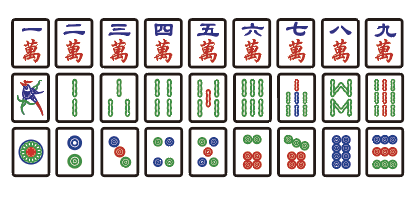
Characters (Crak): Numbered 1 through 9, these cards feature Chinese numerals and the symbol for “ten thousand”.
Bamboo (Bam): Numbered 1 through 9, these are represented by stalks of bamboo. The 1 of Bamboos is often depicted as a bird.
Circles (Dot): Numbered 1 through 9, represented by colorful circular patterns.
Honor Cards (4 of each):
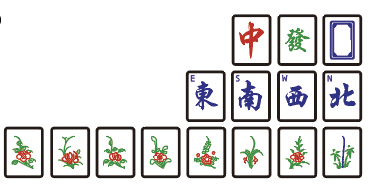
Dragons: There are three types of dragon tiles: Red (中), Green (發), and White (represented by a blank frame).
Winds: There are four directional wind tiles: East (東), South (南), West (西), and North (北).
Bonus Cards (1 of each):
Flowers and Seasons: Includes four of each for optional bonus play and advanced scoring.
Basic Chinese Mahjong: The Simple Edition
A fast-paced version for 4 players using a 136-card deck.
1. The Deck Setup
For this version, set aside all Flower and Season cards (8 cards total). You will use 136 cards:
- Suits (108 cards): Numbers 1–9 in Dots, Bamboos, and Characters (4 of each).
- Honors (28 cards): Four of each Wind (North, South, East, West) and four of each Dragon (Red, Green, White).
2. The Goal
Be the first player to complete a hand of 14 cards. A winning hand consists of four sets (3 cards each) and one pair.
- Pung: 3 of the exact same card.
- Chow: A sequence of 3 cards in the same suit (e.g., 4, 5, 6 of Dots).
- Pair: 2 of the exact same card.
3. How to Play
- Dealing: Shuffle well (it’s a card deck, so shuffle like Poker!). Deal 13 cards to each player. The dealer starts with 14 cards.
- The Turn: The dealer discards one card to begin. Play moves counter-clockwise. Every turn follows a simple loop: Draw 1 card, Discard 1 card.
- Claiming Discards: You can take another player’s discard only if it completes a set:
- To win: You can claim a discard from anyone if it completes your final 14th card.
- For a Pung: You can claim a discard from anyone if you already have the other 2 matching cards in your hand.
- For a Chow: You can only claim a discard from the person to your left.
4. Winning the Game
When you have 13 cards and draw (or claim) the 14th card that completes your four sets and one pair, call out “Mahjong!”
Quick Tips for Cards vs. Tiles
- The Shuffle: Since cards are thinner than tiles, ensure you perform a thorough shuffle to mix cards.
- The “Wall”: In card Mahjong, you don’t need to build a physical wall. Simply place the shuffled deck face-down in the center as a “Draw Pile.”
Detailed Chinese Mahjong (The Full Experience)
A strategic game for 4 players using the complete 144-card deck.
1. The Deck (144 Cards)
Unlike the simple version, we now include the “Luck” cards:
- Suits & Honors (136 cards): Same as Simple (Dots, Bamboos, Characters, Winds, and Dragons).
- Bonus Cards (8 cards): 4 Flowers and 4 Seasons. In card play, these act as “instant point” cards.
2. The Setup & The “Flower” Rule
- Dealing: Deal 13 cards to each player (14 for the dealer).
- The Flower Reveal: If you are dealt a Flower or Season, you must immediately place it face-up on the table and draw a “replacement card” from the back of the deck. If you draw another flower during your turn, repeat this process.
3. Advanced Move: The Kong (Four-of-a-Kind)
A Kong is a set of 4 identical cards. It adds prestige and points to your hand.
- The Action: When you complete a Kong, you must declare it and draw a replacement card.
- Types of Kongs: * Exposed: You have 3 in hand and claim a discard from someone else.
- Concealed: You draw all 4 yourself. You keep these face-down to protect your hand’s secrecy, but you still draw a replacement card.
4. Claiming Discards (The Priority System)
In the detailed version, there is a “pecking order” for who gets a discarded card:
- To Win (Mahjong): Any player can claim a discard to win. This takes priority over everything else.
- To Pung or Kong: Any player can claim a discard for 3 or 4-of-a-kind.
- To Chow (The Sequence): Only the player to the immediate right of the discarder can claim it for a sequence (1-2-3).
5. Winning & Basic Scoring
The game ends when a player has 4 sets (Pungs, Chows, or Kongs) and 1 Pair.
- Self-Drawn Win: If you draw the winning card yourself, everyone pays you.
- Discard Win: If you win off someone’s discard, only the person who threw the card pays you (usually double).
- Bonus Points: Flowers and Seasons collected during the game act as multipliers for your final score.
American Mahjong: The Simple Edition
Perfect for beginners who want to use Jokers without the complexity of a scorecard.
1. The Deck (152 Cards)
- The Essentials: Use all Suits, Winds, and Dragons.
- The Wilds: Add the 8 Joker cards. Jokers can stand in for any card in a set (Pung, Chow, or Kong).
- Optional: Remove Flowers/Seasons to keep it fast.

2. The Goal
Be the first to get 14 cards arranged into four sets and one pair.
- Because you have Jokers, completing sets is much faster!
- Note: In this simple version, you do not need an official NMJL card.
3. Simplified Rules
- No Charleston: Skip the complex passing of cards. Just deal and play.
- Picking Up Discards: You can pick up a discard from any player to complete a Pung, Chow, or Kong.
- Joker Swap: If a player has an “Exposed” set on the table using a Joker, and you have the actual card that Joker is representing, you can swap your card for that Joker on your turn!
American Mahjong: NMJL Rules
The standard competitive version used in clubs across the United States.
1. Requirement: The Card
To play this version, every player must have the current year’s National Mah Jongg League (NMJL) official scorecard. The goal is to match one of the specific “hands” listed on that card.
2. The Charleston (The Passing Phase)
Before the game begins, players engage in a mandatory series of card exchanges:
- Right, Over, Left (3 cards each time).
- Left, Over, Right (3 cards each time).
- The Optional “Blind” Pass: A final agreement to swap 1-3 cards with the player across from you.
3. Gameplay Logic
- The Goal: You are not just making “sets”—you are building a specific pattern from the NMJL card (e.g., “2468” or “Winds & Dragons”).
- No “Chows”: Unlike the Chinese version, you cannot pick up a discard to make a sequence (1-2-3) unless it is for your final “Mahjong” call or specified by the card.
- Jokers: Use to create a quint (5 of a kind) or a sexlet (6 of a kind). They cannot be used to complete a Pair or a Single.
- The Win: You must have the exact 14 cards required by a line on the NMJL card.
Japanese Riichi Mahjong
The strategic, competitive standard for tactical players.
1. The Setup (136 Cards)
To play Riichi, use the standard suits and honor cards.
- The Deck: Remove all Jokers, Flowers, and Seasons.
- The Dora Indicator: After shuffling and placing the deck face-down, turn the 5th card from the back face-up. This is the Dora Indicator.
- The Dora Bonus: The card following the indicator in sequence is the “Dora.” (Example: If the indicator is a 2-of-Dots, the 3-of-Dots is the Dora). Each Dora card in your winning hand adds a massive point multiplier.
2. The Goal: The “Yaku” Requirement
To win, you must have a hand of four sets and one pair (14 cards total), but with one major catch: your hand must contain at least one Yaku (a specific scoring pattern). You cannot win on a “random” hand.
Common Yaku include:
- All Simples: A hand with no 1s, 9s, Winds, or Dragons.
- White Dragon Pung: A set of three White Dragons.
- Riichi: (See below).
3. The Signature Move: Declaring “Riichi”
If your hand is closed (you haven’t claimed any discards) and you are exactly one card away from winning:
- Shout “Riichi!” and place a 1,000-point bet (or marker) in the center.
- Turn your discarded card sideways to mark the turn you declared.
- The Risk: Your hand is now locked. You must discard every card you draw unless it is your winning card. Winning this way grants you an automatic Yaku.
4. Advanced Defense: The Furiten Rule
This is the ultimate strategy rule. It prevents players from “sniping” specific opponents.
- If you have previously discarded a card that could have finished your current hand, you are in Furiten.
- The Penalty: You cannot claim a discard from someone else to win (Ron). You must draw the winning card yourself (Tsumo).
5. How to Win
- Ron: Winning by claiming someone else’s discard.
- Tsumo: Winning by drawing the final card yourself.
6. Aka-Dora (Red Fives)
In modern Japanese play, one ‘5’ from each suit is colored entirely red. These act as “Permanent Dora.” Pro Tip: Look out for our upcoming MahjGo Riichi deck which includes red fives and dedicated scoring cards!
Quick Riichi Glossary
| Term | Meaning |
| Tenpai | Being one card away from winning. |
| Han | The “points” or “levels” of your hand. |
| Dora | A bonus card that adds points but does not count as a Yaku. |
| Pon/Chi/Kan | The Japanese terms for Pung, Chow, and Kong. |